
Graham County Criminal Cases
A criminal court record begins when the prosecutor files a criminal case in court. In Graham County, felony and misdemeanor prosecutions are handled in the Kansas District Court system. The case file is kept by the Graham County District Court Clerk and may include the complaint or information, bond orders, docket entries, motions, plea records, hearing settings, warrants, sentencing orders, fines, costs, restitution, probation terms, and revocation proceedings.
The criminal court record is distinct from the arrest-side record held by law enforcement, the current custody status held by the sheriff or jail, and the statewide criminal history record offered through Kansas.gov. For the charge list itself and how court charges after arrest are filed, use Graham County arrest records and court charges. For all case categories, use Graham County court records.
The Kansas criminal history record search portal is a statewide KBI/Kansas.gov channel, separate from the Graham County criminal court case file.
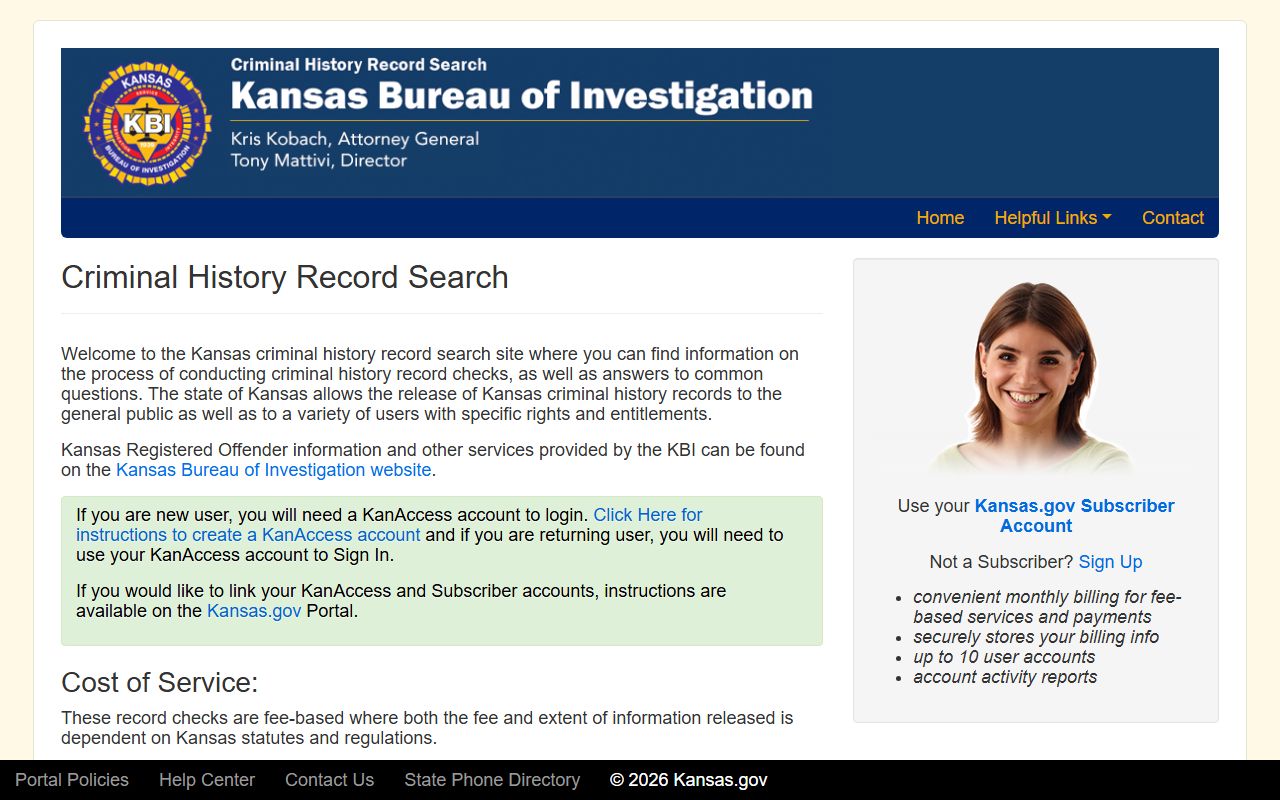
Use criminal history searches for statewide history checks and court records for the local case docket, filings, and disposition.
Search Graham County Criminal Records
Start with Kansas CaseSearch for public Graham County District Court criminal case information. Search by case number if known, or by defendant name if the case number is not available. A citation search may work for payable criminal, traffic, fish and game, or juvenile offender matters, but a citation result is not always the full case file. If the case appears online but a document is missing, contact the District Court Clerk for a copy request.
- Search Kansas CaseSearch by case number, defendant name, business name, citation, or role-based criteria.
- Verify that the result is a Graham County District Court case before reading the docket.
- Review the criminal docket for charges filed, hearing entries, bond events, motions, pleas, warrants, disposition, and sentencing.
- Check whether a later amendment, dismissal, plea, or sentencing entry changed an earlier charge.
- Call the Graham County District Court Clerk at 785-421-3458 for certified copies, older files, or documents not released online.
For custody, bond, release, and current jail questions, contact the Graham County Sheriff's Department at 785-421-2107 or use the Graham County inmate records page for jail-specific channels. Court records and jail records answer different questions.
Graham County Criminal Case Flow
Criminal court records should be read as a sequence. A charge filed early in a case may be amended, reduced, dismissed, or resolved by plea or trial. A warrant entry may show failure to appear or another enforcement issue, while a sentence entry may show custody, probation, fines, costs, restitution, or other terms. The final disposition controls the outcome.
Case flow: Charges Filed › Arraignment › Pretrial / Motions › Plea or Trial › Disposition › Sentencing
| Stage | What Happens |
|---|---|
| Charges Filed | The prosecutor files the formal accusation, creating a court charge record. |
| Arraignment | The defendant is advised of charges and a plea may be entered. |
| Pretrial / Motions | Parties file motions, address evidence issues, negotiate pleas, and set hearings. |
| Plea or Trial | The case resolves by plea, dismissal, bench trial, jury trial, or other court action. |
| Disposition | The docket records the outcome of each charge or the case as a whole. |
| Sentencing | The court enters punishment and terms such as jail, probation, fines, costs, or restitution. |
Graham County Criminal Record Fields
A Graham County criminal court record can contain both case-wide fields and charge-specific fields. The case-wide record identifies the court, county, case number, defendant, prosecutor, judge or magistrate, and status. The charge-level record can show count number, offense name, statute, severity or class, alleged date, plea, disposition, and sentence. Financial fields may appear for fines, fees, costs, restitution, bond, or payment plans.
| Field | What It Shows |
|---|---|
| Case Number | The unique identifier for the Graham County criminal case. |
| Defendant | The person charged in the criminal case. |
| Charges | Count, offense name, statute, severity or class, and alleged date when public. |
| Bond | Release terms, bond type, amount, or custody-related court orders. |
| Plea | The defendant's formal response to each charge. |
| Docket Events | Filings, hearings, continuances, orders, warrants, motions, trial settings, and appeals. |
| Disposition | The outcome of a charge, such as guilty, dismissed, acquitted, amended, or diverted. |
| Sentence | Jail, prison, probation, fines, costs, restitution, supervision, or other court terms. |
The KBI registered offender registry is another statewide tool, but it covers registered sex, violent, and drug offenders under its statutory purpose.
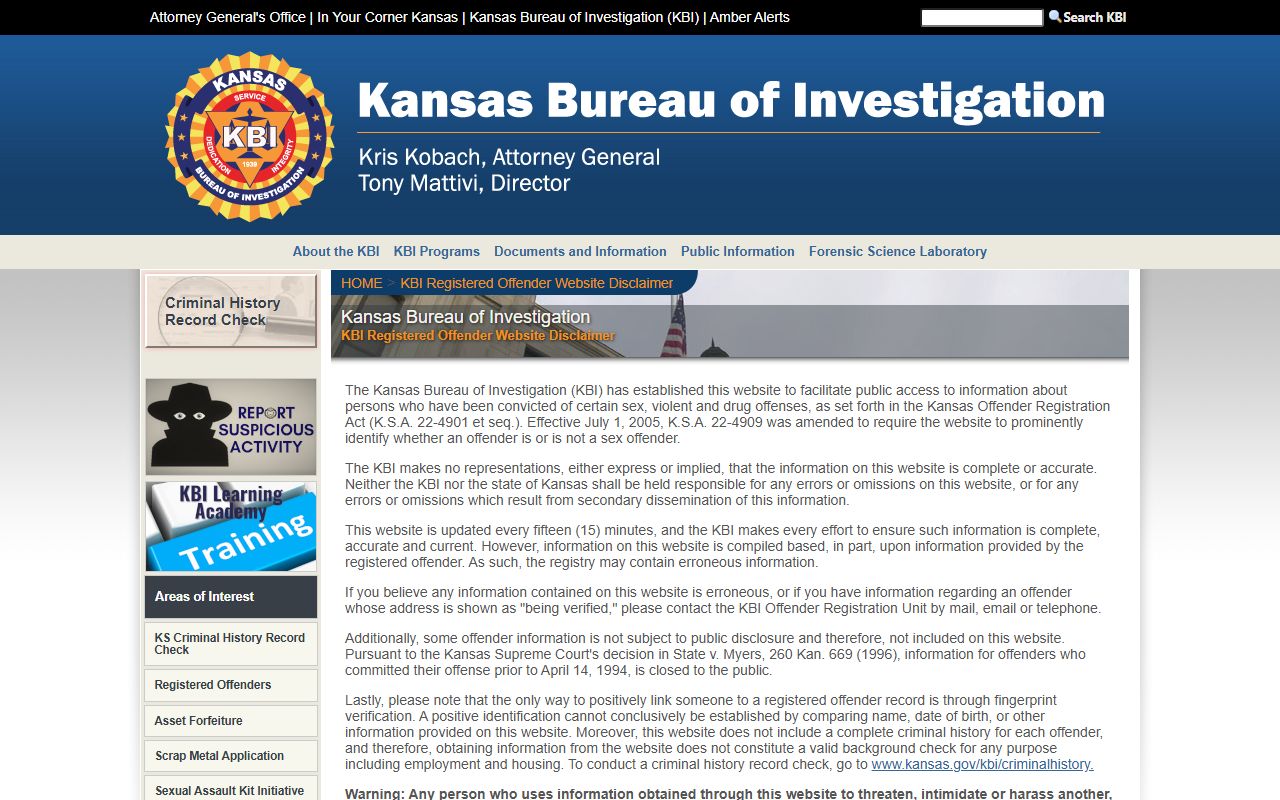
A registry result is not the same as the Graham County criminal court record, which is the case file and docket held by the court.
Charges vs Convictions
Being charged is not the same as being convicted. A Graham County criminal court record can list charges that were later amended, dismissed, reduced, diverted, resolved by plea, or resolved after trial. Read each charge with its final disposition and sentence. A case can have several counts, and each count may end differently.
| Charge | Conviction | |
|---|---|---|
| Stage | Formal accusation filed with the court. | Final guilt result by plea, verdict, or court finding. |
| Proof Level | Based on charging decision and probable cause. | Resolved under criminal proof standards or plea process. |
| Docket Meaning | May be pending, amended, dismissed, or diverted. | Should be tied to disposition and sentence entries. |
| Public Record | Often public in adult cases unless restricted. | Often public unless sealed, expunged, juvenile, or confidential. |
Sealed or Expunged Records
Kansas expungement is petition-based for many adult criminal records. K.S.A. 21-6614 covers expungement of certain convictions, arrest records, and diversion agreements. K.S.A. 22-2410 covers petitions to expunge eligible arrest records. Eligibility depends on the case, timing, disposition, and statute. The Graham County-specific filing fee was not located in official sources, so applicants should call the District Court Clerk before filing.
The K.S.A. 21-6614 expungement statute is central to many Kansas conviction, arrest, and diversion expungement questions.
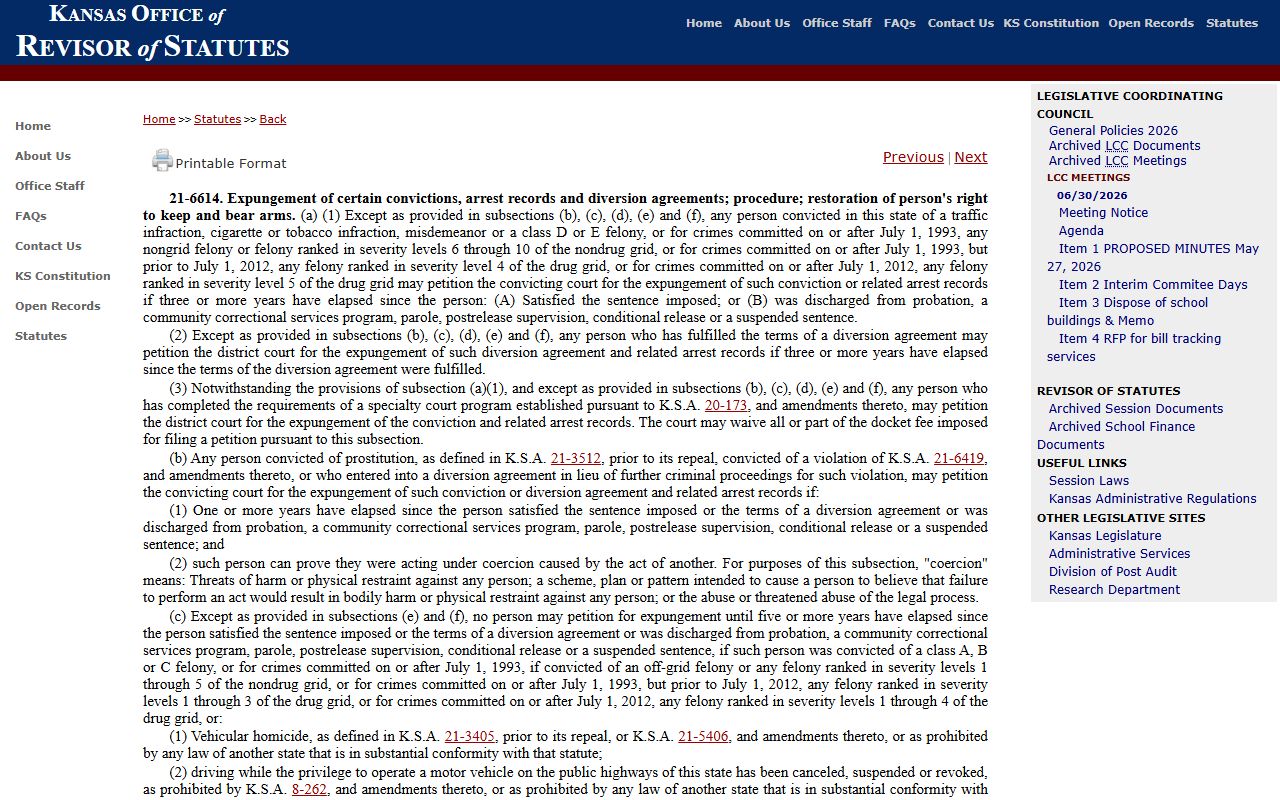
That statute may limit public access after a successful court order, but it does not erase all agency access for every purpose.
The K.S.A. 22-2410 arrest expungement statute is a separate Kansas route for eligible arrest records.
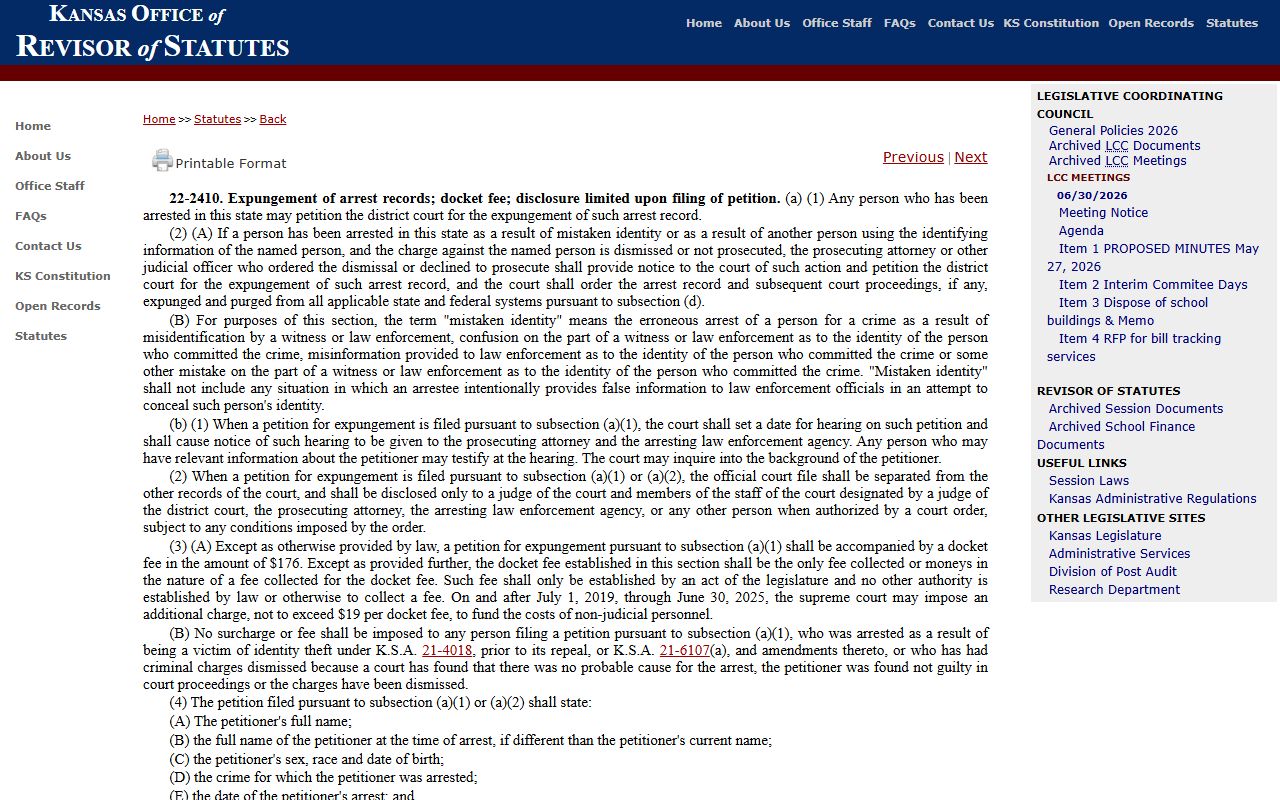
Use the court where the arrest, charge, conviction, or diversion occurred when pursuing case-specific expungement relief.
| Sealed | Expunged | |
|---|---|---|
| Public View | Closed or partly hidden from ordinary inspection. | Public access is limited after the expungement order. |
| How It Happens | By statute, court rule, or court order. | Usually by petition and court order under Kansas law. |
| Agency Access | Some authorized users may retain access. | Some law, licensing, or public-safety access may remain. |
Criminal Access Rules
Kansas law distinguishes public court records from criminal history record information. K.S.A. 22-4701 defines criminal history record information and excludes court records of public judicial proceedings from that definition. K.S.A. 22-4707 restricts dissemination of criminal history record information by criminal justice agencies. That distinction is why a Graham County criminal court record and a KBI history check can answer different questions.
The K.S.A. 22-4701 definitions page helps separate public court proceedings from criminal history record information.
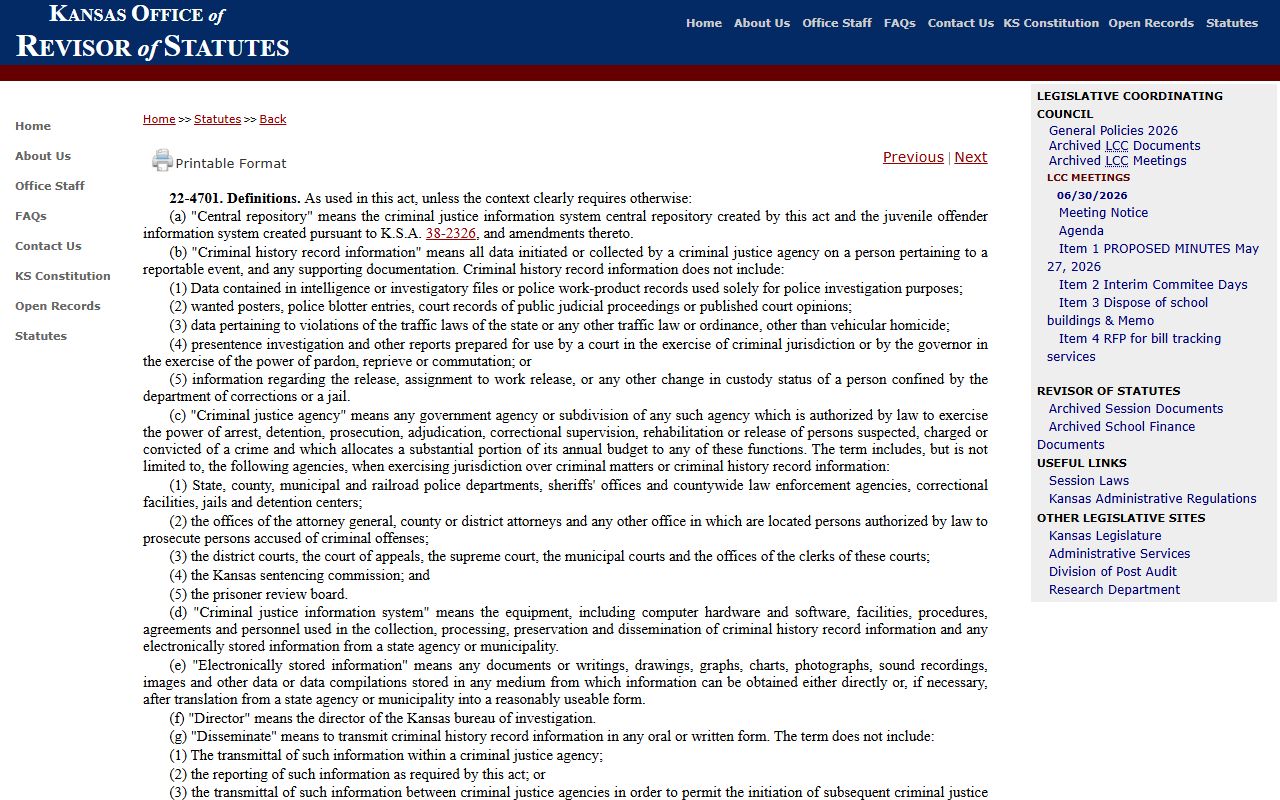
That distinction is useful when a record seeker needs a court docket rather than a criminal justice agency history file.
The K.S.A. 22-4707 dissemination restriction governs criminal history information handled by criminal justice agencies.
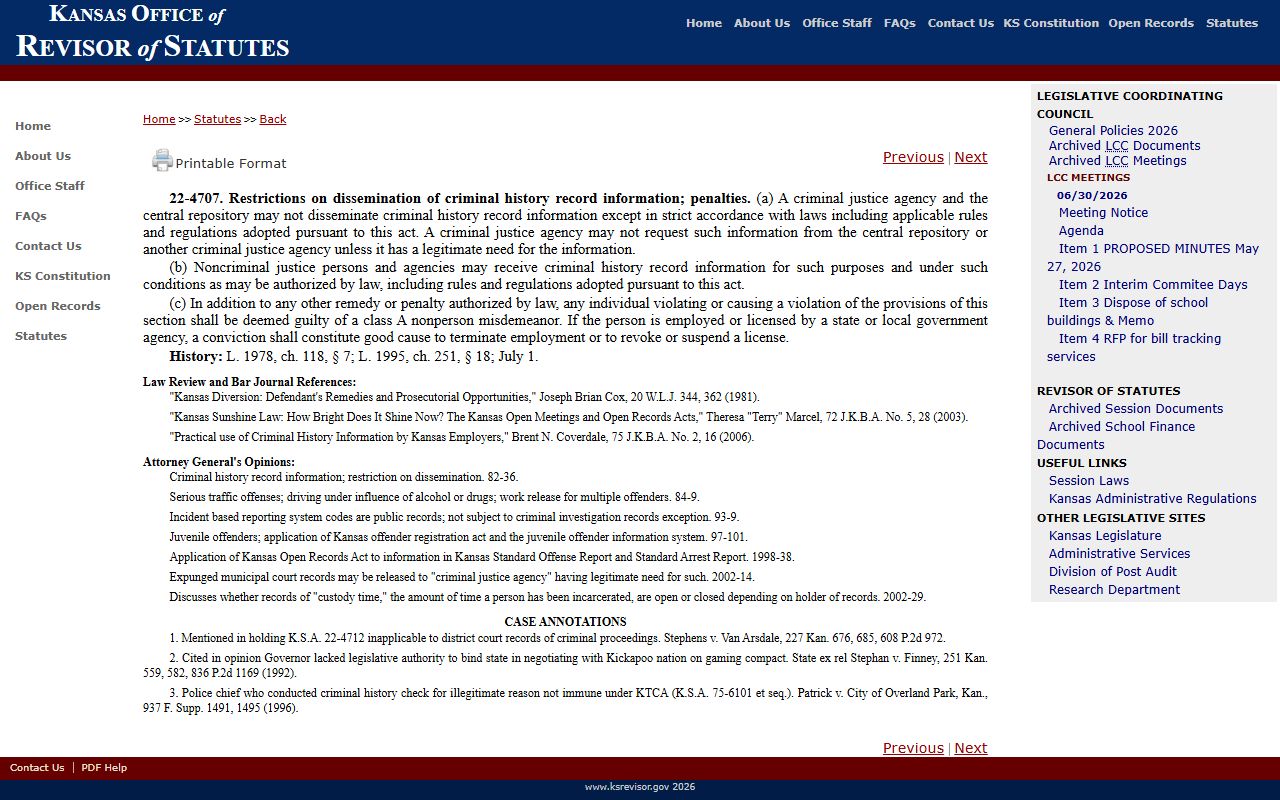
Use court records for filed case activity and KBI channels for statewide criminal history checks where appropriate.
Restricted Graham County Criminal Records
Restricted criminal court records include juvenile offender matters, child-in-need-of-care records, sealed cases, expunged records, protected personal identifiers, and records tied to sensitive investigations. Kansas district courts also handle care and treatment matters, but medical and treatment details are protected. Juvenile case information may not display like adult criminal dockets.
For defense counsel issues, Kansas provides appointed counsel through the Kansas State Board of Indigents' Defense Services structure or assigned counsel when a defendant cannot afford an attorney. Graham County research did not locate a dedicated local public defender office, so request appointed counsel through the court process when charged.
Important: Criminal court records are public records for reference use, not FCRA consumer reports for employment, housing, credit, or insurance decisions.